E-Bikes, Dirt Bikes, Scooters & More
As warmer weather arrives, we're seeing more e-bikes, scooters, dirt bikes, ATVs, and other forms of micromobility on our roadways and trails. While these vehicles may look similar, Pennsylvania law treats them very differently.
Understanding the rules can help keep everyone safe and prevent costly citations.
Bicycles
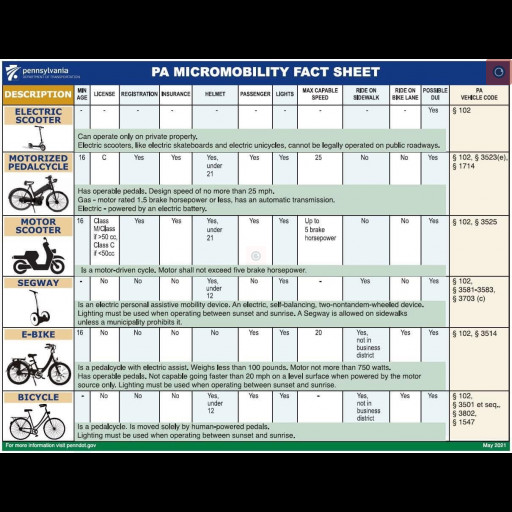
Traditional bicycles are considered vehicles under Pennsylvania law. Riders must follow traffic laws and are permitted on most roadways unless specifically prohibited.
Electric Bicycles (E-Bikes)
Pennsylvania recognizes e-bikes as bicycles if they:
• Have operable pedals
• Have an electric motor of 750 watts or less
• Weigh no more than 100 pounds
• Cannot exceed 20 mph under motor power alone
E-bike riders generally have the same rights and responsibilities as traditional bicyclists and do not need a driver's license, registration, or insurance.
Electric Scooters
Popular stand-up scooters are not currently approved for operation on Pennsylvania roadways. Electric scooters meet the defintion of a motor vehicle and cannot be operated in public streets.
Motorcycles, Mopeds, and Motor-Driven Cycles
Vehicles that exceed Pennsylvania's e-bike definitions may be classified as motorcycles or motor-driven cycles. These vehicles may require registration, insurance, a valid driver's license, and appropriate safety equipment.
Dirt Bikes and ATVs
Dirt bikes (Electric Dirt Bikes) and all-terrain vehicles (ATVs) are not permitted on public streets and highways unless specifically authorized by law. These vehicles are designed for off-road use and can result in citations, fines, towing, and other enforcement actions when operated unlawfully on public roadways.
Safety First
Regardless of what you ride:
• Wear a helmet.
• Follow traffic laws.
• Remain visible to motorists.
• Avoid distracted riding.
• Never operate under the influence of drugs or alcohol.
Before purchasing or riding any micromobility device, take time to understand how Pennsylvania law classifies it. What may appear to be a bicycle could actually require registration, insurance, and a licensed operator—or may not be legal on public roadways at all.