


Storm and Flooding Reminders and Tips
With more wet weather on the way here are some storm and flooding reminders and tips from ready.pa.gov.
During a Thunderstorm
Get inside a home, building, or hard top automobile (not a convertible). Although you may be injured if lightning strikes your car, you are much safer inside a vehicle than outside.
Avoid the following:
- Natural lightning rods such as a tall, isolated tree in an open area.
- Hilltops, open fields, the beach or a boat on the water.
- Isolated sheds or other small structures in open areas.
- Anything metal, such as tractors, farm equipment, motorcycles, golf carts, golf clubs and bicycles.
Additional tips:
- Remember, rubber-soled shoes and rubber tires provide NO protection from lightning. However, the steel frame of a hard-topped vehicle provides increased protection if you are not touching metal.
- Avoid showering or bathing. Plumbing and bathroom fixtures can conduct electricity.
- Use a corded telephone only for emergencies. Cordless and cellular telephones are safe to use.
- Unplug appliances and other electrical items such as computers and turn off air conditioners. Power surges from lightning can cause serious damage.
- Listen for weather updates from local officials.
Flood Facts for Driving
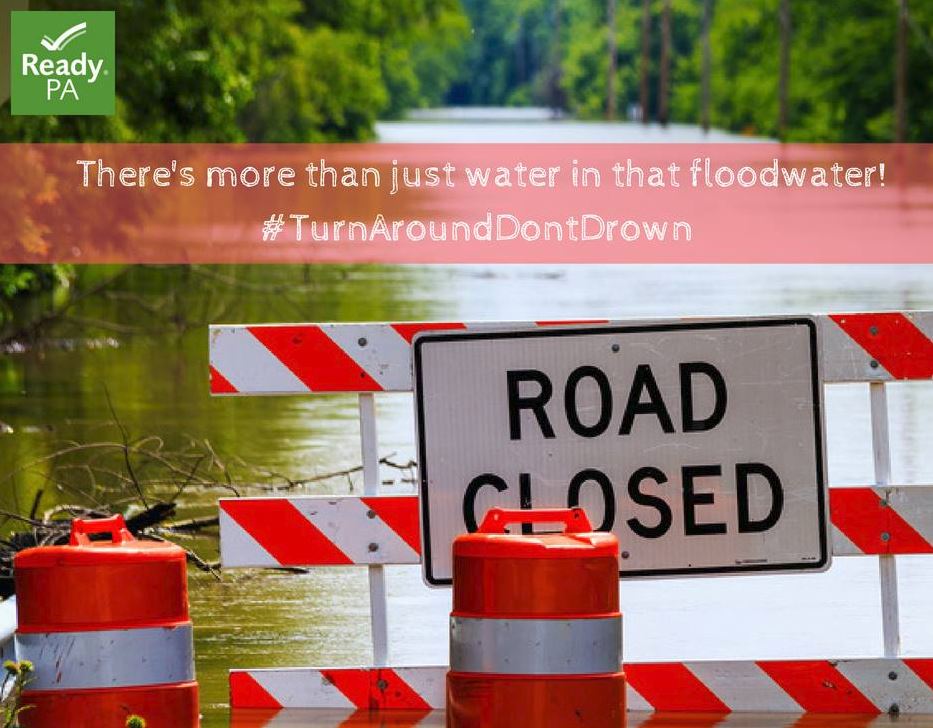
- Six inches of water will reach the bottom of most passenger cars causing loss of control and possible stalling.
- A foot of water will float many vehicles.
- Two feet of rushing water can carry away most vehicles including sport utility vehicles (SUVs) and pick-ups.
- Remember: Turn Around, Don't Drown!
Learn more about what to do when encountering flooded roadways from the Pennsylvania Department of Transportation.
What to Do in a Flash Flood
Flash floods occur within six hours of the beginning of heavy rainfall. Below are some guidelines for keeping safe during a flash flood:
- Go to high ground immediately.
- Get out of areas subject to flooding, such as low spots, canyons, washes, etc.
- Do not attempt to cross a flowing stream on foot. Even water only six inches deep, when moving at a high rate of speed, can knock you off your feet.
- Never drive through flooded areas or standing water. Shallow, swiftly flowing water can wash a car from a roadway. Also, the roadbed may not be intact under the water.
- If the vehicle stalls, abandon it immediately and seek higher ground. Rapidly rising water may engulf the vehicle and its occupants.
- Be especially cautious at night when it’s harder to recognize flood dangers.
- Do not camp or park your vehicle along streams and washes, particularly during threatening conditions.
- Understand the difference between a flash flood watch and a flash flood warning.
- A flash flood watch means that flooding may occur. Residents should stay alert, closely monitor rivers and streams, and be prepared to move to high ground quickly. A flash flood warning means that there is actual flooding. Residents should act at once and move to high ground.
Created Aug 18, 2021 @ 9:12 AM | Updated Aug 18, 2021 @ 11:43 AM

